Profile complexity increases aluminum extrusion cost by raising die tooling requirements, lowering material yield, and adding post-processing labor. Engineers must balance design intent with manufacturability to control budget and lead time.
- Complex shapes require more expensive and durable tooling, which increases the upfront cost per meter.
- Thin walls and sharp corners reduce the percentage of usable material, directly raising raw material costs.
- Post-processing operations like cutting, drilling, and heat treatment add labor time to complex profiles.
- Designing with manufacturability in mind can lower unit pricing and speed up production schedules.
How die design complexity changes the tooling price
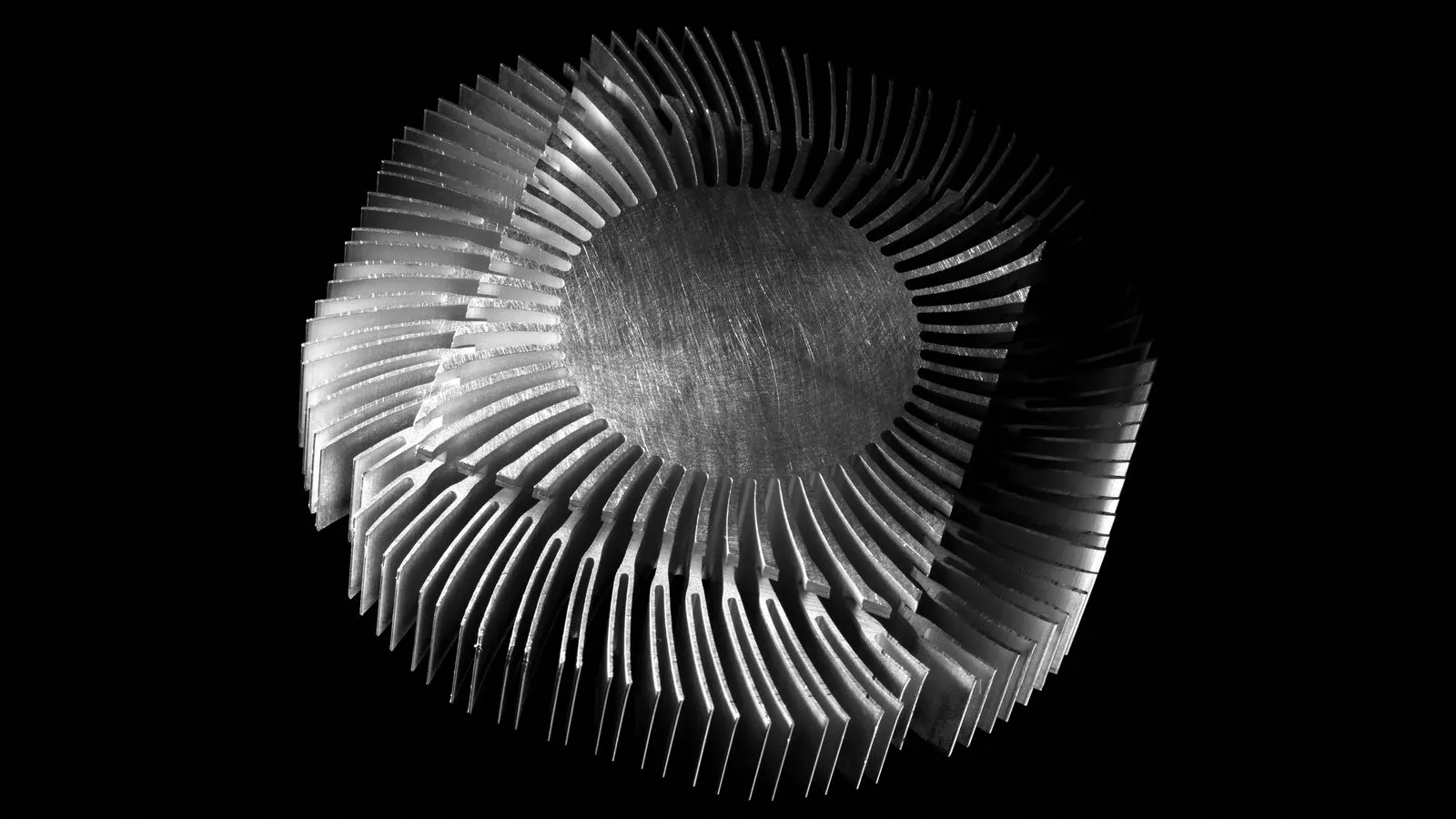
The first major factor in extrusion pricing is the die itself. An extrusion die is a hardened tool, typically made from tungsten carbide or high-speed steel, that forces molten aluminum into a specific cross-section. The die sits at the end of the extrusion line and determines the final geometry of the product. Simple shapes, such as a standard square bar or a basic channel, use dies with fewer cavities and smoother transitions. Complex shapes, such as heat sink fins or architectural mullions with internal ribs, require dies with multiple cavities, intricate cooling channels, and sharp internal corners.
When a die contains many cavities, the tool maker must machine each one precisely. More cavities mean more machining time and more inspection points. The tool maker must grind the die face, which is the surface of the die that the aluminum touches. This grinding requires micrometer-level accuracy. If the die face is even slightly out of alignment, the aluminum will not flow evenly, causing stress concentrations and defects. The cost of the die goes up because the labor hours increase. A die for a simple square bar might take a few days to machine. A die for a complex heat sink with dozens of fins might take weeks. This cost is usually spread across the first production run. If the order is small, the tooling cost per meter is high. If the order is large, that same tooling cost gets divided by many more meters, lowering the per-unit price.
Engineers must understand that die tooling is a fixed cost. The more complex the profile, the higher the fixed cost. This is why manufacturers often ask for a minimum order quantity. The quantity must be large enough to cover the tooling expense and still leave a reasonable profit margin. A new die can cost several thousand dollars, depending on the complexity and the material used. If the first order is only 500 meters, the tooling cost per meter is significant. If the first order is 50,000 meters, the tooling cost per meter becomes negligible. The die remains in the factory for future orders, so the tooling cost is only fully recovered on the first run.
Why thin walls and sharp corners reduce yield
Yield is the percentage of material that comes out of the die and remains usable. In a simple profile, the walls are thick enough to survive the high pressure of the extrusion process. In a complex profile with very thin fins or sharp internal corners, the material often thins out or tears.
When the extrusion line runs, the aluminum flows through the die. At sharp internal corners, the metal cannot flow smoothly. It stretches thin. If the wall is too thin, it may crack or develop surface defects. These defects force the manufacturer to trim the piece or reject it. A thin fin on a heat sink, for example, might be designed to be 1.5 millimeters thick. During extrusion, the pressure can stretch that fin to 1.2 millimeters or even less. If the spec requires a minimum thickness of 1.5 millimeters, the profile is rejected.
A high rejection rate means more raw material is wasted. If the yield drops from a typical level to a lower level, the manufacturer must buy more raw aluminum to produce the same number of good meters. The cost of the raw material per good meter rises. For instance, if the yield drops from 95 percent to 80 percent, the manufacturer needs 18.75 percent more raw aluminum to produce the same amount of good product. This extra cost is passed on to the buyer.
Engineers often design thin walls to reduce weight or improve heat dissipation. While these goals are valid, they must be balanced against yield. A profile that is too thin may cost more per meter than a slightly thicker alternative because of the material waste. It is often more cost-effective to design a fin that is 2 millimeters thick than to design a fin that is 1.5 millimeters thick and risk rejection. The 2 millimeter fin may be slightly heavier, but the manufacturing cost is lower and the process is more stable.
The impact of profile length and wall thickness
The length of the profile also affects cost. Extrusion lines produce long continuous lengths. After extrusion, the profiles are cut to specific lengths. If the profile is very long, the cutting process takes more time. If the profile is very short, there may be more waste from the cutting ends.
Wall thickness affects the cost of the extrusion process itself. Thicker walls require more pressure to push the aluminum through the die. This increases the wear on the die and the energy consumption of the extrusion line. High pressure can also lead to more defects, which ties back to the yield issue. A thick wall profile, such as a large structural beam, requires more tonnage from the extrusion press. The press must generate higher force to push the aluminum through the die. This increases the wear on the die and the energy consumption of the extrusion line.
A balanced profile design, where wall thicknesses are relatively uniform and not extremely thin, generally results in better yield and lower processing costs. The extrusion line runs more smoothly, and the die lasts longer. If the wall thickness varies significantly within a single profile, the aluminum flows at different speeds through different sections. This creates internal stresses and can cause the profile to buckle or warp as it cools. The extrusion line must slow down to prevent these issues, which reduces the production rate and increases the cost per meter.
Post-processing requirements add labor costs
After the aluminum leaves the die, it is a continuous rod. Most buyers need the profile cut to length. This is a standard post-processing step. However, complex profiles often require more post-processing.
Some profiles need drilling or tapping for mounting hardware. If the holes are located in thin walls or near internal corners, they are harder to drill. The tool may need to be positioned carefully to avoid damaging the surrounding material. This takes more time per piece. A standard square bar can be drilled quickly with a standard drill press. A complex mullion with thin fins and internal channels requires a specialized fixture to hold the profile in place while drilling. The fixture setup takes time, and the drilling process must be slow to prevent the thin walls from bending or cracking.
Heat treatment is another major factor. Most structural extrusions require a T6 heat treatment to reach the desired strength. The heat treatment process involves heating the entire profile in an oven. The thicker the profile, the longer it takes to heat through and cool down. Complex profiles with varying wall thicknesses can heat unevenly. This requires careful control of the oven temperature and the quenching process. If the profile is not heated evenly, the strength will be inconsistent. Some areas may be over-tempered and too soft, while others may be under-tempered and too brittle. This requires more inspection and can lead to rejection.
If the profile requires surface finishing, such as anodizing, the complexity of the shape can affect the finish quality. Sharp corners may not anodize uniformly. This can lead to rework or acceptance of a lower quality finish. Anodizing is an electrochemical process that creates a hard, protective layer on the aluminum surface. The thickness of the anodized layer depends on the voltage and the time. In a complex profile with deep recesses and sharp corners, the anodizing layer may be thinner in the recesses and thicker on the edges. This unevenness can affect the appearance and the protective properties of the finish.
How volume and order size affect unit pricing
The relationship between complexity and cost is not linear. It depends heavily on order size. A complex profile with a high tooling cost will have a high unit price for a small order. The tooling cost is a large fraction of the total cost.
As the order size increases, the tooling cost per meter decreases. This is the principle of economies of scale. A simple profile with low tooling cost will have a low unit price for a small order. However, if the yield is low due to design flaws, the unit price may still be high.
Engineers should consider the total lifetime cost of the part. If the profile will be used in a product that lasts for many years, a slightly higher unit cost for a more complex but higher performance part may be justified. However, if the part is a consumer good with a short life cycle, the lower unit cost of a simpler profile is often preferred.
The minimum order quantity is a key metric to watch. A manufacturer with a large, established die shop may have a lower minimum order quantity for a new die. A smaller manufacturer may require a larger order to justify the tooling investment. The minimum order quantity is the smallest amount of product that the manufacturer will make for a new die. It is designed to ensure that the tooling cost is recovered. If the order is below the minimum, the manufacturer will likely charge a higher unit price or require a larger tooling fee.
Practical considerations for controlling extrusion pricing
To control aluminum extrusion cost, engineers should review the design for manufacturability. This does not mean removing all features. It means ensuring that the features can be produced reliably and within budget.
One technique is to avoid unnecessary internal corners. If a part does not need a sharp internal corner, a small radius can be added. This improves material flow and reduces the risk of defects. It also reduces the wear on the die. A radius of 1 to 3 millimeters is often sufficient to improve flow without significantly changing the strength of the profile.
Another technique is to standardize wall thickness. If possible, keep the wall thicknesses within a narrow range. This simplifies the heat treatment and reduces the risk of uneven cooling. It also improves the yield. A profile with all walls at 3 millimeters is easier to extrude and heat treat than a profile with walls ranging from 1.5 to 5 millimeters. The 3 millimeter wall profile will have a more consistent strength and a higher yield.
Finally, engineers should discuss the design with the extrusion supplier early in the process. The supplier can provide feedback on potential issues. They can suggest design changes that will lower the cost without compromising the function. This collaboration is one of the most effective ways to manage extrusion pricing. The supplier has experience with many different profiles and can identify potential problems before the die is made. A small design change at the early stage can save thousands of dollars in tooling costs and production waste.
Summary of cost drivers
The table below summarizes the main cost drivers related to profile complexity. It shows how each factor influences the final price per meter.
| Cost Driver | Effect on Pricing |
|---|---|
| Die Complexity | Higher tooling cost, higher per-meter price for small orders |
| Thin Walls | Lower yield, higher raw material cost per good meter |
| Sharp Corners | Higher defect rate, lower yield, more die wear |
| Post-Processing | Increased labor time for drilling, cutting, and heat treatment |
| Order Size | Higher unit price for small orders, lower for large orders |
Understanding these drivers allows engineers to make informed design decisions. By balancing design intent with manufacturing constraints, they can achieve a good result for both performance and cost.
Frequently asked questions
Does a more complex profile always cost more?
Yes, generally. Complexity increases die tooling costs and reduces yield, which raises the per-meter price. However, the impact is moderated by order volume.
Can a simple profile have a high cost?
Yes. A simple profile with a very low order quantity will have a high per-meter cost because the tooling cost is not spread over enough units.
How do I reduce the cost of my extrusion?
You can reduce costs by simplifying the design, increasing order volume, and working with the supplier to optimize the tooling and process.
What is the biggest cost factor for a new profile?
Die tooling is usually the largest upfront cost for a new profile. The yield and post-processing costs are the largest recurring costs.
Should I always choose the simplest profile possible?
No. The profile must meet the functional requirements. The goal is to find the balance between performance and cost, not just to choose the simplest shape.