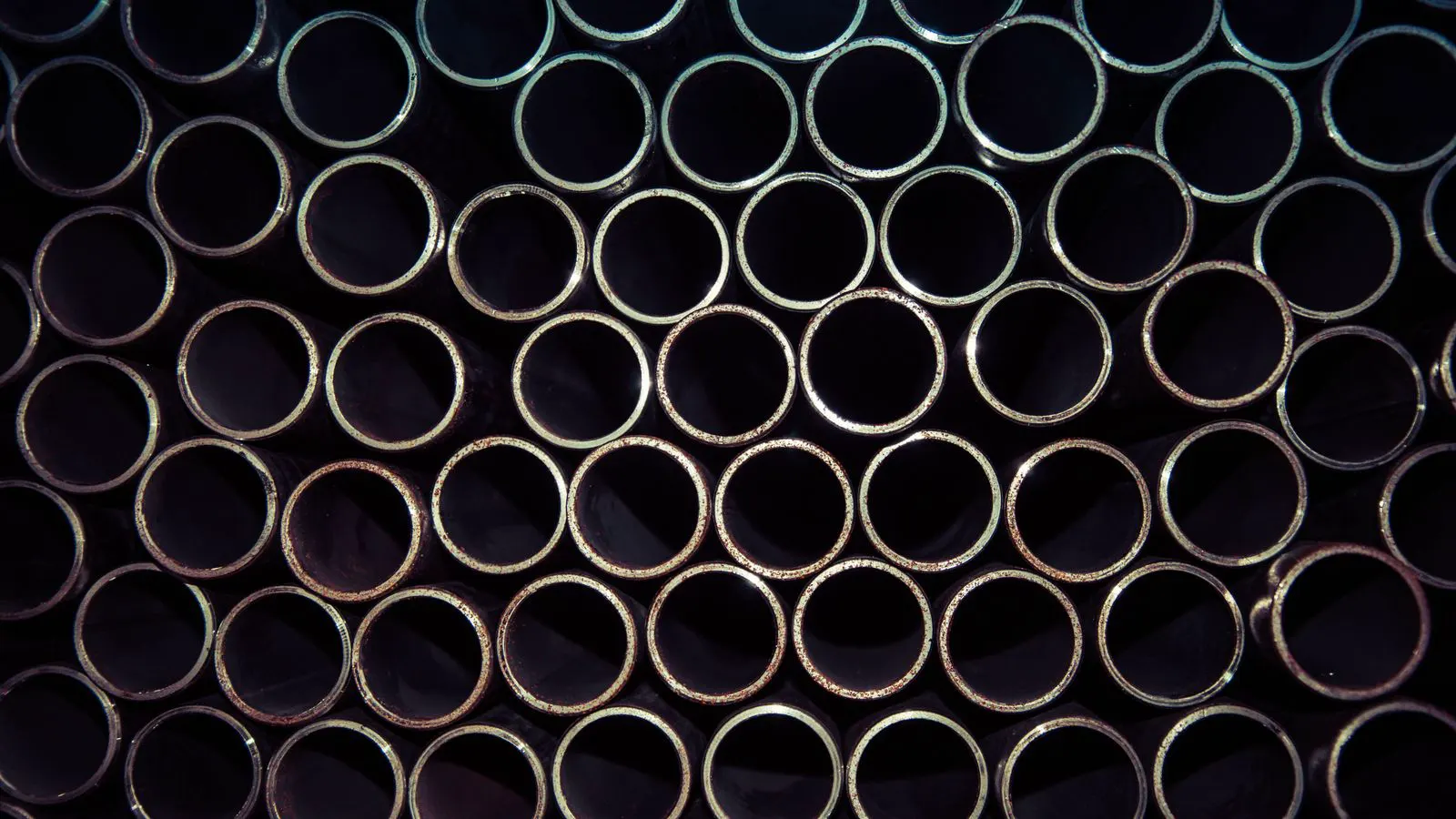
Hollow profiles typically offer better structural performance per kilogram and lower material usage, while solid profiles provide higher stiffness and simpler handling. The right choice depends on load paths, fabrication needs, and target weight.
- Hollow profiles often reduce weight and material cost without losing bending strength.
- Solid profiles are simpler to machine and handle but use more material for the same section.
- The right cross section depends on load path, deflection limits, and fabrication method.
- Wall thickness and hole placement drive structural performance more than profile type alone.
- Choose the profile that matches the structure, not a default preference.
Which profile type wins on weight and bending strength?
Start with the load path. A hollow profile distributes material away from the neutral axis, which is where bending stress is highest. That geometry gives it a high moment of inertia for a given amount of metal. A solid profile keeps material through the center, so it resists shear and local bearing better, but it carries dead weight in the middle of the section.
For long spans, hollow wins. A window frame or a long beam with the same outer dimensions will usually deflect less if the material is moved into the walls. Consider a structural beam supporting a floor. If you make it solid, every kilogram of metal in the center adds to the dead load of the span. If you make it hollow, that same metal moves to the edges, increasing stiffness without adding weight. The result is a section that deflects less under the same load.
For short, heavily loaded joints, a solid section can be stronger where it matters. Think of a corner post that connects two beams, or a bearing seat that supports a rotating shaft. In these cases, the cross section experiences high localized stress. A solid profile provides continuous material to resist that stress. A hollow profile at the same location may have thin walls that buckle or crack under the concentrated force.
The practical trade-off is simple. Hollow profiles save weight and material. Solid profiles save machining time and local handling cost. When deciding, look at the dominant force. If the structure bends over a distance, weight is the enemy. If the structure takes point loads, material continuity is the requirement.
How does profile cross section affect structural performance?
The cross section is the whole story. Two profiles can have the same mass but very different stiffness. A thin-walled hollow profile may buckle under compression if the wall is too light. A solid profile may be too heavy for the support structure.
Check three things before choosing a cross section.
- Bending stiffness. This is controlled by the distance of material from the center. Hollow sections put material farther out, so they usually win. Imagine two blocks of aluminum with the same mass. One is a solid square. The other is a square tube. If you bend both over a simple support, the tube will deflect less. The material in the tube is farther from the neutral axis, creating a larger lever arm against the bending moment.
- Torsional resistance. Closed hollow sections resist twisting better than open channels. Solid sections resist torsion less efficiently per unit mass. Torsion is a common failure mode in vehicle frames and architectural mullions. If a section twists, the outer surfaces stretch and compress while the center stays relatively still. A closed tube traps the material, preventing it from moving out of plane. An open channel can warp easily. A solid section resists torsion, but it requires a lot of metal in the center to do so.
- Local stability. Thin walls need adequate corner radii and hole placement to avoid buckling. When a hole is drilled near a corner, the remaining material is reduced. If the wall is thin, that remaining material can fold inward under compression. Corner radii help stress distribution. Sharp corners in thin walls create stress concentrations that lead to cracking.
The right cross section is not the thickest one. It is the one that keeps deflection, stress, and local stability within limits while staying light enough for the structure. Engineers often use optimization software to test these variables, but the principles remain the same: put material where the stress is, and keep the section stable against local failure.
Comparison of solid and hollow extrusion profile design
| Option | Best for | Limitations |
|---|---|---|
| Solid square or rectangle | Short, heavily loaded joints, machining, simple handling | Higher weight, higher material cost, lower stiffness per kilogram |
| Hollow square or rectangle | Long spans, frames, weight-sensitive structures | More sensitive to wall thickness, corner damage, and buckling |
| Open hollow profile | Channels, stiffeners, non-critical spans | Lower torsional resistance, needs bracing for long unsupported lengths |
| Closed hollow profile | Torsion-sensitive frames, automotive or architectural panels | More complex extrusion, harder to machine hollow interiors, higher cost |
| Hybrid or reinforced profile | Mixed load paths, local reinforcement, custom joints | Higher design cost, longer lead time, less standard availability |
Pick the option that matches the dominant failure mode. If the structure bends, choose a hollow section with good moment of inertia. If it twists, choose a closed hollow or a solid section with a larger shear area. If it needs a machined seat or a bearing surface, choose a solid section or a hybrid with a solid local area.
For example, a vehicle chassis rail often uses a closed hollow profile. It must resist torsion during cornering and support heavy vertical loads. A solid rail would be too heavy and would increase fuel consumption or battery range. An open channel would twist too much. The closed hollow profile balances weight, stiffness, and torsional resistance.
On the other hand, a machine frame base plate often uses a solid section or a hybrid. It needs to support heavy machinery and provide flat, machined surfaces for mounting. The weight is acceptable because the span is short and the structure is bolted to the floor. The machinability of the solid section allows for precise fits and tolerances.
When to choose a solid extrusion profile
Choose solid when the part is short, the load is concentrated, or the profile will be machined in multiple directions. A solid corner post that takes a bracket and a hinge is easier to machine than a hollow corner with thin walls. The tool can cut into the full section without worrying about breaking through the back wall.
In fabrication, this simplicity saves time. A CNC mill can remove material from a solid block to create a complex joint. It does not have to worry about chipping the inner wall or causing collapse. This is why solid profiles are common in high-precision machinery, such as linear guides and robotic arms. The material must be rigid and stable. Any flex would affect accuracy.
Solid profiles are also easier to handle on the job site. A worker can clamp, drill, and bolt without fear of cracking a thin wall. If the structure is small and the span is limited, the weight penalty is often acceptable. Consider a small frame for a sensor array. The frame is only a few inches long. It carries a few pounds of equipment. The weight of the aluminum is negligible. A solid profile is cheaper to buy and easier to install than a complex hollow section.
Do not choose solid just because it is simpler. If the span is long, the weight will drive up support costs, and the structure may deflect more than a comparable hollow section. A solid beam for a roof truss would be excessively heavy. The supports would need to be larger to hold the weight, and the truss itself would be harder to lift into place. In these cases, the simplicity of the solid section is outweighed by the inefficiency of the weight.
When to choose a hollow extrusion profile
Choose hollow when weight matters or the span is long. A long roof purlin, a window frame, or a vehicle frame rail will usually perform better as a hollow section. The material is where it works, and the dead weight is lower.
Hollow profiles also help with thermal performance in some applications. A hollow wall can reduce heat transfer compared to a solid block of the same size. This is less common in structural profiles, but it is worth checking if the profile is also an enclosure or a heat management part. For example, a heat sink for an electronic component might use a hollow section with internal fins. The hollow area allows airflow to pass through, cooling the component while the fins provide surface area for heat dissipation. The weight is lower than a solid block of the same size, which is important for portable equipment.
The main risk is thin walls. If the wall thickness is too low, the section can buckle under compression or dent under impact. The design must check local stability, not just global bending. A thin-walled hollow profile can be lighter and stronger, or it can be weaker and more fragile. The difference is in the wall thickness and corner radii.
Consider a bicycle frame. It uses thin-walled hollow tubes. The tubes are lightweight but strong. The geometry is carefully designed to place material at the points of high stress. If the wall thickness is reduced too much, the frame will deform under the rider’s weight. The tubes will dent at the joints or crack at the corners. The design must balance weight savings with local strength.
How to set the wall thickness for the chosen profile
Wall thickness is the most common mistake in both solid and hollow designs. Thin walls save material but can fail locally. Thick walls waste material and add weight.
Start with the load case. For a hollow section in bending, the wall thickness must be thick enough to resist local buckling under compressive stress. For a section in torsion, the wall thickness must be thick enough to resist shear. For a section in compression, the wall thickness must be thick enough to avoid Euler buckling of the wall itself.
A practical check is to compare the calculated stress against the yield strength with a safety factor. Then check the slenderness ratio of the wall. If the wall is too thin, increase the thickness or add a rib. If the wall is too thick, reduce it or change the cross section to a shape that uses the material better.
For instance, take a rectangular tube used as a beam. The top wall is in compression, and the bottom wall is in tension. The top wall is more likely to buckle. The thickness of the top wall must be sufficient to prevent this buckling. If the beam is long, the buckling risk is higher. A rib can be added to the top wall to increase local stiffness without adding significant weight.
Do not guess. Use the load path, the span, the support conditions, and the material yield strength. The wall thickness should be the result of the calculation, not a default value. Many designers use standard thicknesses, but these are starting points, not final answers. The specific application dictates the required thickness.
Common mistakes when comparing solid and hollow profiles
The first mistake is comparing mass without comparing stiffness. A hollow profile can be lighter and stiffer than a solid profile of the same outer size. Engineers often look at the weight per meter and assume the lighter one is better. They forget that stiffness depends on the distribution of material. A light hollow section can be stiffer than a heavy solid section. Always compare the deflection under load, not just the weight.
The second mistake is ignoring local loading. A hollow profile with a thin wall can fail at a hole or a corner even if the global bending is fine. Consider a mounting plate. If you drill a hole for a bolt, you remove material. If the wall is thin, the remaining material around the hole is weak. It can tear or crack under the bolt load. The global bending of the plate may be fine, but the local hole causes failure. Reinforcement is needed around the hole.
The third mistake is assuming that hollow is always cheaper. Hollow profiles often use less material, but the extrusion die, the machining, and the handling can add cost. A solid profile may cost more in material but less in fabrication. The total cost includes the die, the extrusion, the machining, the transport, and the installation. A complex hollow die is expensive to build and maintain. A simple solid die is cheaper. If the part does not need to be hollow, the solid profile may be the better economic choice.
The fourth mistake is not checking torsion. A hollow section can bend well but twist poorly if it is open. A solid section can resist torsion better per unit mass in some cases, but it will be heavier. The load path decides. If the structure is subject to twisting, an open hollow section may fail. A closed hollow section or a solid section is required.
Final selection criteria
Use the load path first. If the structure bends, choose a hollow section with a high moment of inertia. If it twists, choose a closed hollow section or a solid section with a larger shear area. If it takes local bearing loads, choose a solid section or a hybrid with a solid local area.
Then check the fabrication. If the profile will be machined in multiple directions, a solid section is often easier. If the profile will be bolted or welded, a hollow section is often lighter and cheaper to transport. Consider the assembly process. If the part must be joined to another part with a weld, the hollow section must be accessible for welding. If the weld is internal, it is difficult to inspect. A solid section may be easier to weld from the outside.
Finally, check the total cost. Material, die, machining, transport, and installation all matter. The best profile is the one that meets the structural performance limits with the lowest total cost and the simplest fabrication. This requires a holistic view. It is not just about the aluminum. It is about the entire system, from the raw material to the final installation.
Frequently asked questions
Is a hollow extrusion profile always stronger than a solid one?
Not always. A hollow profile usually has better bending stiffness per kilogram, but a solid profile can be stronger in local bearing, shear, and short spans. The load path decides.
Can I use a thin-walled hollow profile for a long span?
Only if the wall thickness is thick enough to resist local buckling. A thin wall can buckle under compression or dent under impact, even if the global bending is fine.
Is a solid profile cheaper to manufacture?
Often yes, because the die is simpler and the machining is easier. But a hollow profile uses less material, so the total cost depends on the span, the load, and the fabrication method.
How do I decide between a solid and a hollow cross section?
Start with the dominant failure mode. Bending favors a hollow section with a high moment of inertia. Torsion favors a closed hollow section or a solid section with a larger shear area. Local bearing favors a solid section.
What is the biggest mistake in choosing a profile cross section?
Comparing mass without comparing stiffness and local stability. A lighter hollow profile can be stronger, or it can be weaker if the wall is too thin. The wall thickness and corner radii matter as much as the outer shape.